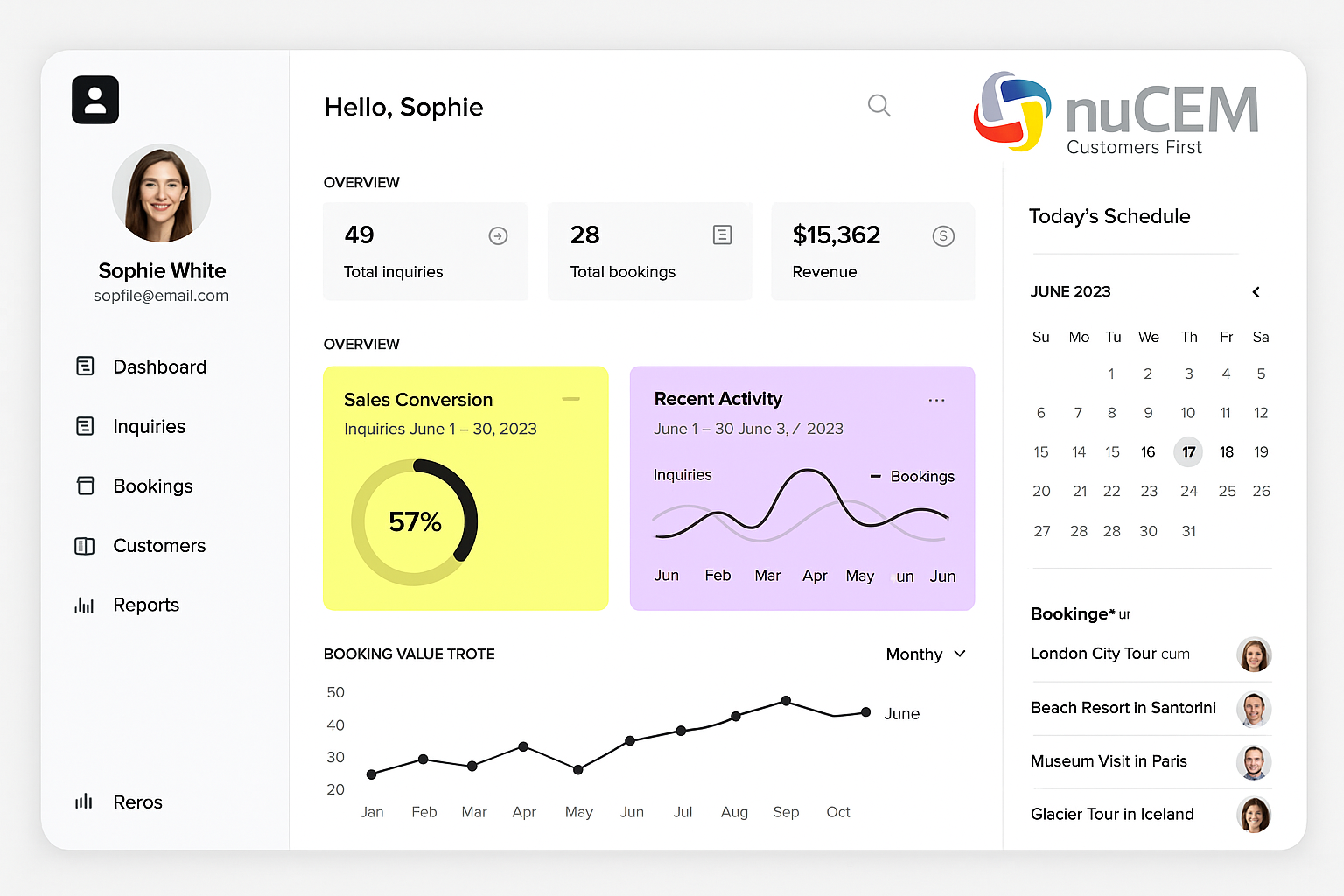
A Travel CRM is a customer relationship management system designed specifically for travel agencies, tour operators, and travel companies. It helps capture enquiries from multiple channels, track lead status, manage follow ups, monitor SLA commitments, and improve enquiry to booking conversion.
A Travel Agency CRM is built for travel specific workflows such as quotation tracking, multi service bookings, visa processing, ticket issuance, and post travel follow ups. Unlike generic CRM systems, it supports structured lead progression and service level tracking for the travel industry.
Travel agencies need a CRM to prevent lead leakage, track enquiry sources, enforce follow ups, and gain visibility into conversion ratios. A Travel CRM centralizes Email, WhatsApp, Meta leads, website forms,walk-ins, telephone enquiries in one system, ensuring no opportunity is missed.
The best CRM for travel agencies is one that supports multi channel enquiry capture, structured sales workflow, SLA monitoring, and post booking service tracking. It should also provide reporting dashboards, source wise ROI visibility, and scalable workflow control for both small and large agencies.
Yes. A modern Travel CRM should capture Meta lead forms, WhatsApp enquiries, Email, website forms, and telephone calls in one centralized platform. This ensures better tracking, faster response time, and higher enquiry to booking conversion.
Yes. A Tour Operator CRM supports complex itineraries that include flights, hotels, visas, insurance, and ground services under one structured request. It ensures sales progression, service coordination, and SLA compliance.
Yes. A Travel Agency CRM can support both B2B Travel CRM and B2C Travel CRM workflows. It manages corporate accounts, contracts, and multi service bookings while also handling individual customer enquiries.
A CRM in the travel and tourism industry improves operational control, increases conversion rates, reduces internal chaos, and enforces service discipline. It connects enquiry capture, sales tracking, and service execution into one measurable system.
Yes. A Travel Management System or Travel CRM can integrate with accounting platforms and ERP systems such as TRAACS. This ensures confirmed bookings move seamlessly into invoicing, accounting, and reporting workflows.
A Travel CRM improves revenue by:
- Eliminates missed enquiries
- Enforces follow-up discipline
- Tracks conversion ratios
- Monitors SLA compliance
- Reduces operational leakage
- Converts manual processes into structured workflows
- Increases enquiry-to-booking conversion
- Improves overall profitability
By turning manual processes into structured workflows, it increases enquiry to booking conversion and improves overall profitability.